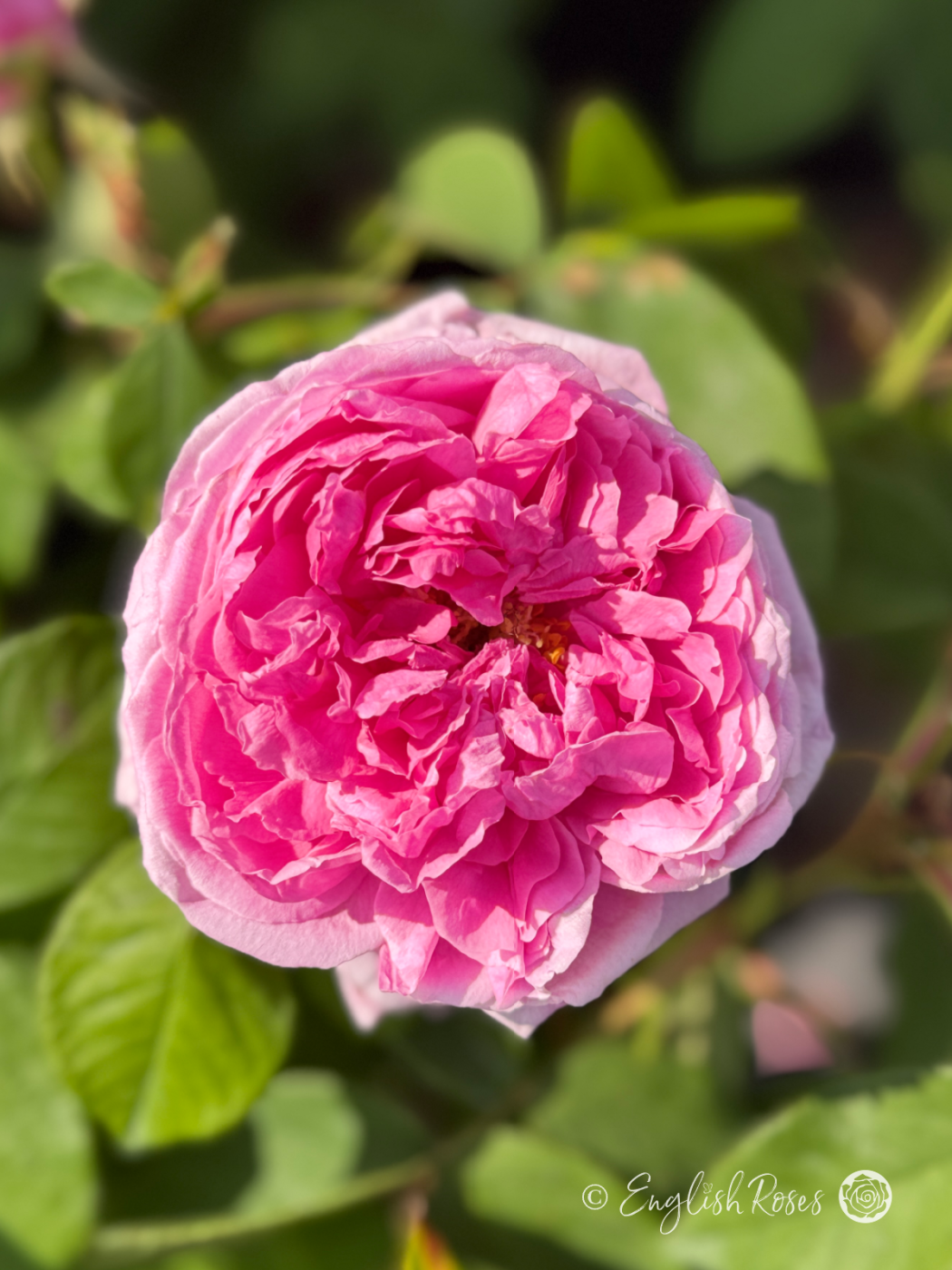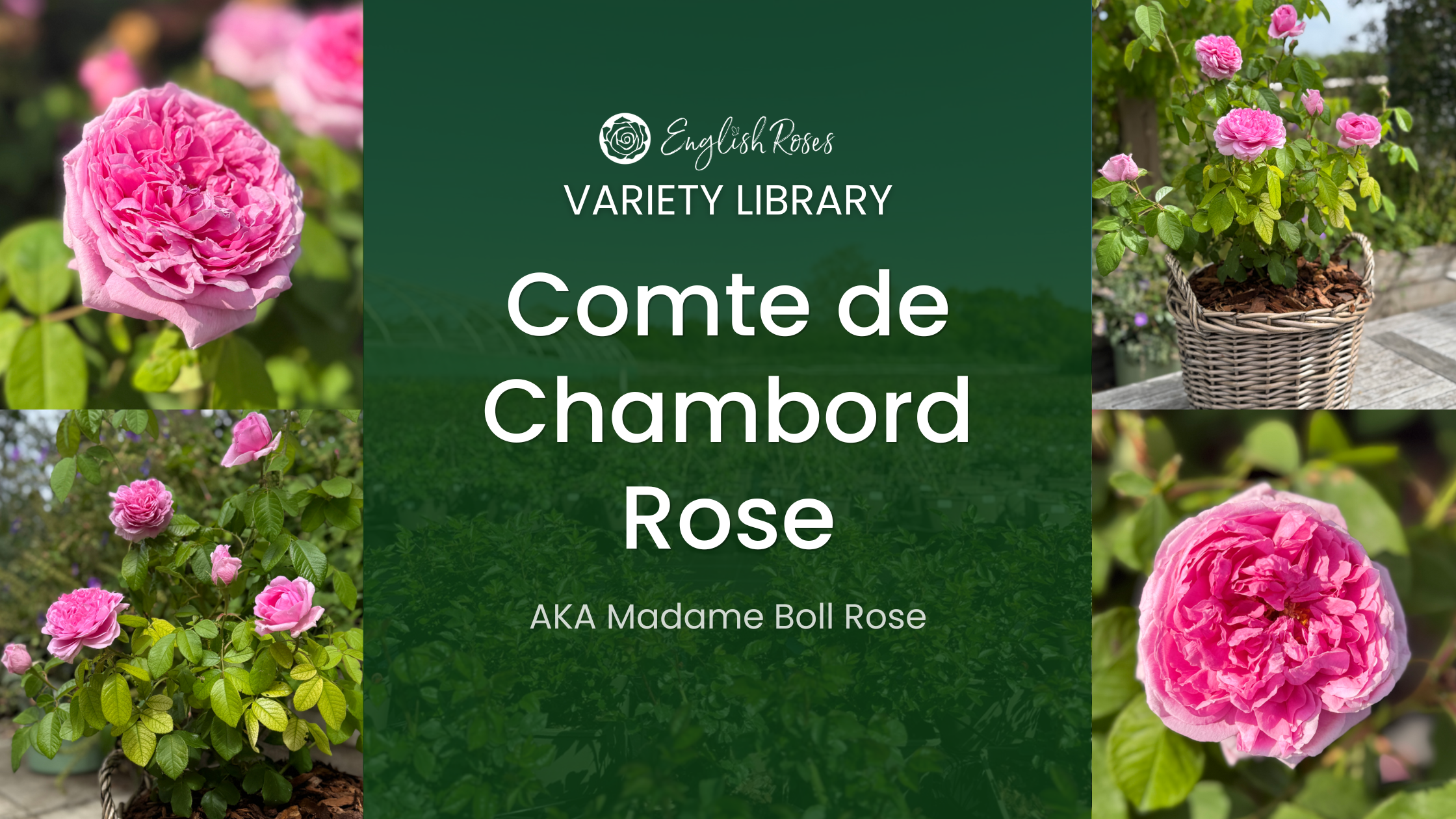
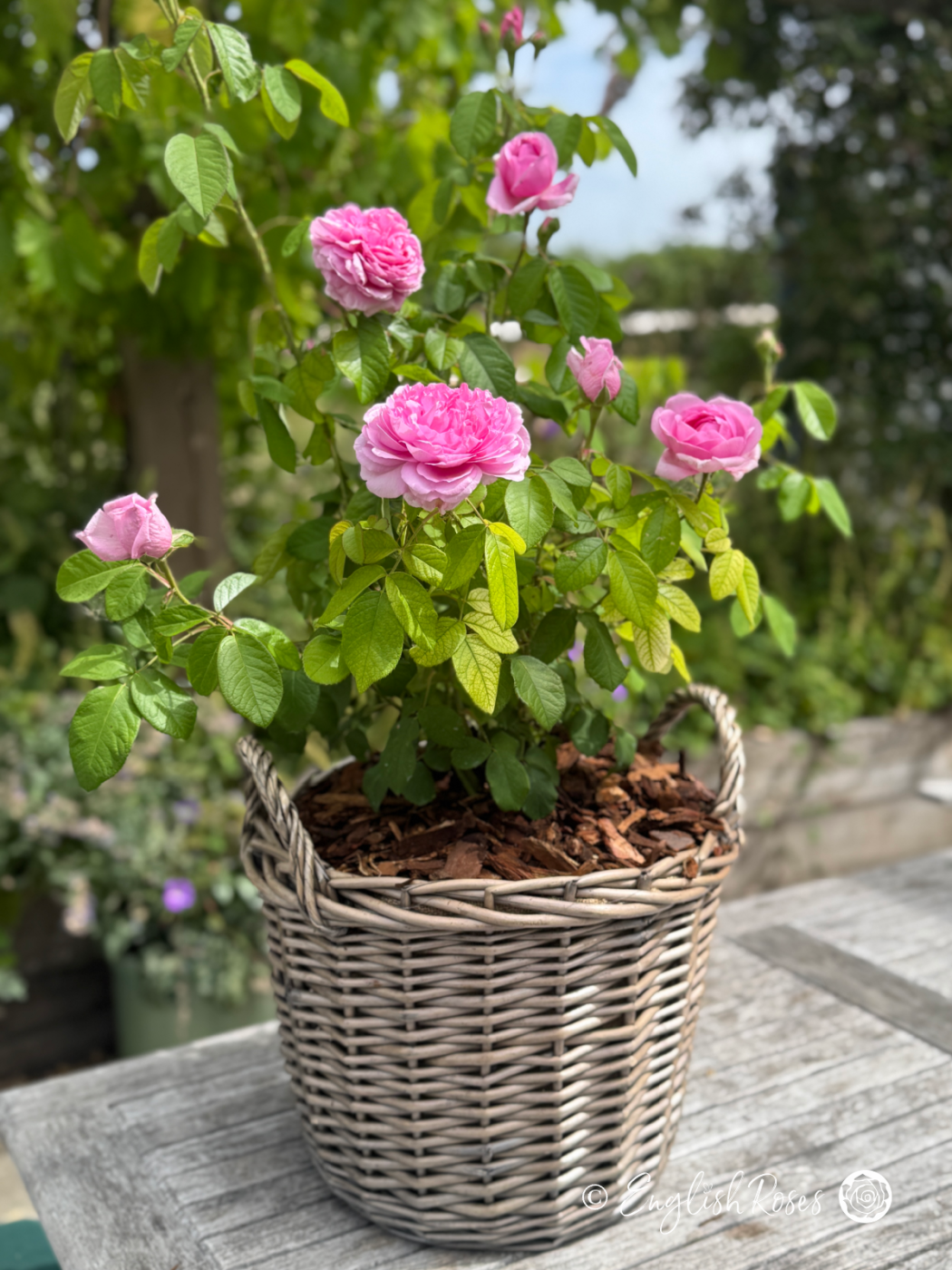
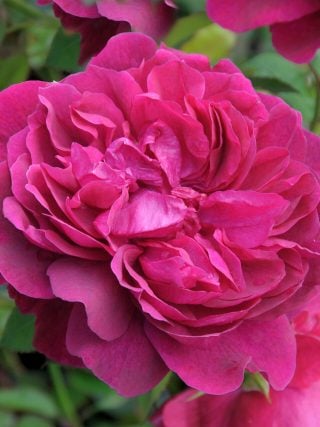
A classic old fashioned Portland bush rose producing large frilly pink blooms. A reliable and robust plant with oodles of old world character. Particularly valued for its repeat flowering which is a rare quality found in old roses. Valued for its trinity of qualities: beauty, fragrance and practicality. You can purchase Comte de Chambord rose here.
Watch our video to see how this wonderful variety looks in the garden.
Description
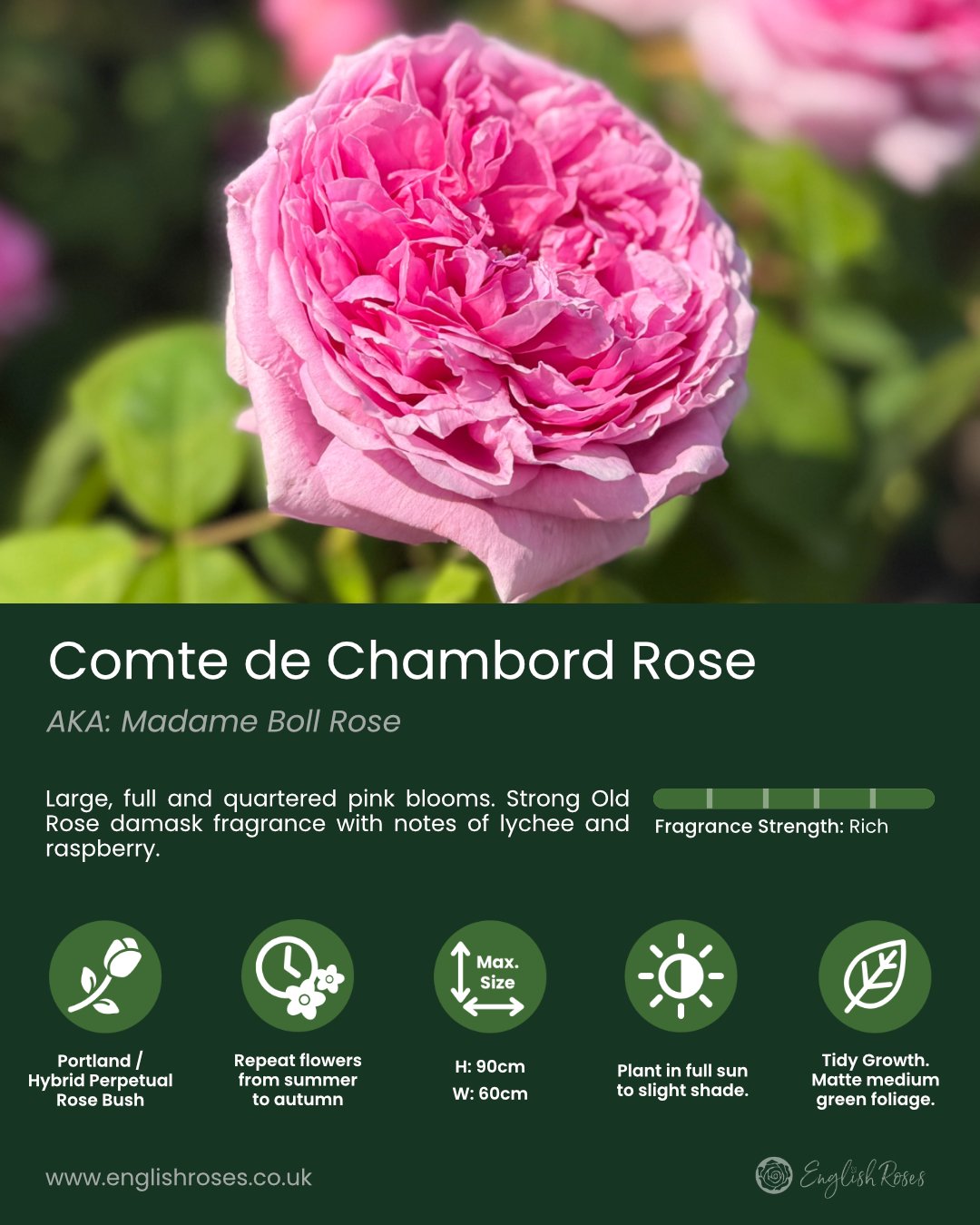
| Colour: | Light magenta |
| Maximum Height/Width: | 90cm / 60cm |
| Foliage: | Light to mid-green with a matte finish |
| Habit: | A tidy and upright shrub that is well rounded enough to look good when not in flower. |
| Petal and Form: | Up to 55 petals, large, full and quartered |
| Blooming Period: | A generous flush in June followed by repeat flowering into Autumn. |
| Fragrance Profile: | Strong Old Rose damask fragrance with hints of lychee and raspberry. |
Photos
Taken here at English Roses, we have a selection of photographs showing this wonderful rose variety.
Fragrance Profile
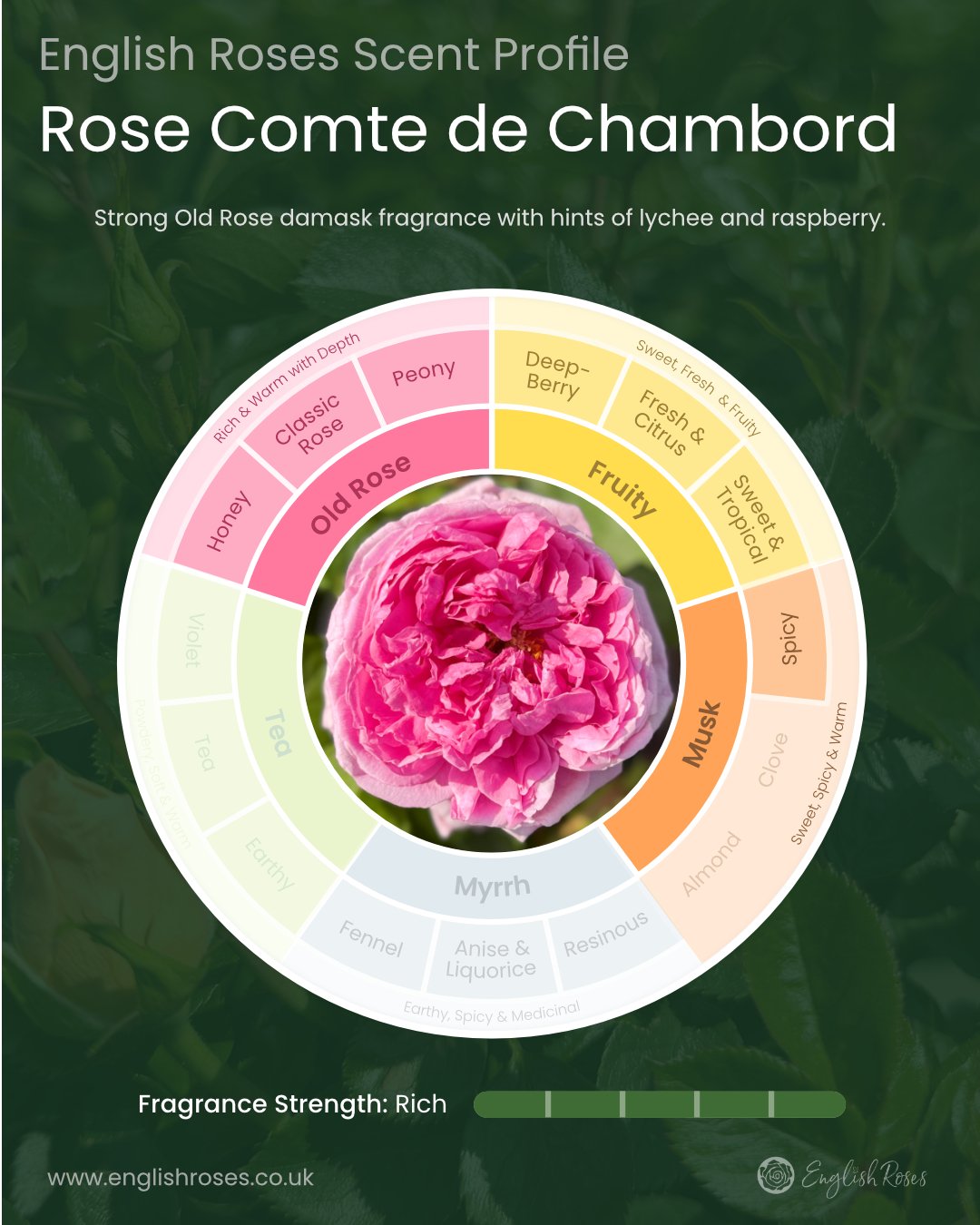
Strong Old Rose Damask fragrance with hints of lychee and raspberry.
Strength – Strong
Primary Scent – Damask
Nuance – Lychee and Raspberry
Nomenclature and Classification
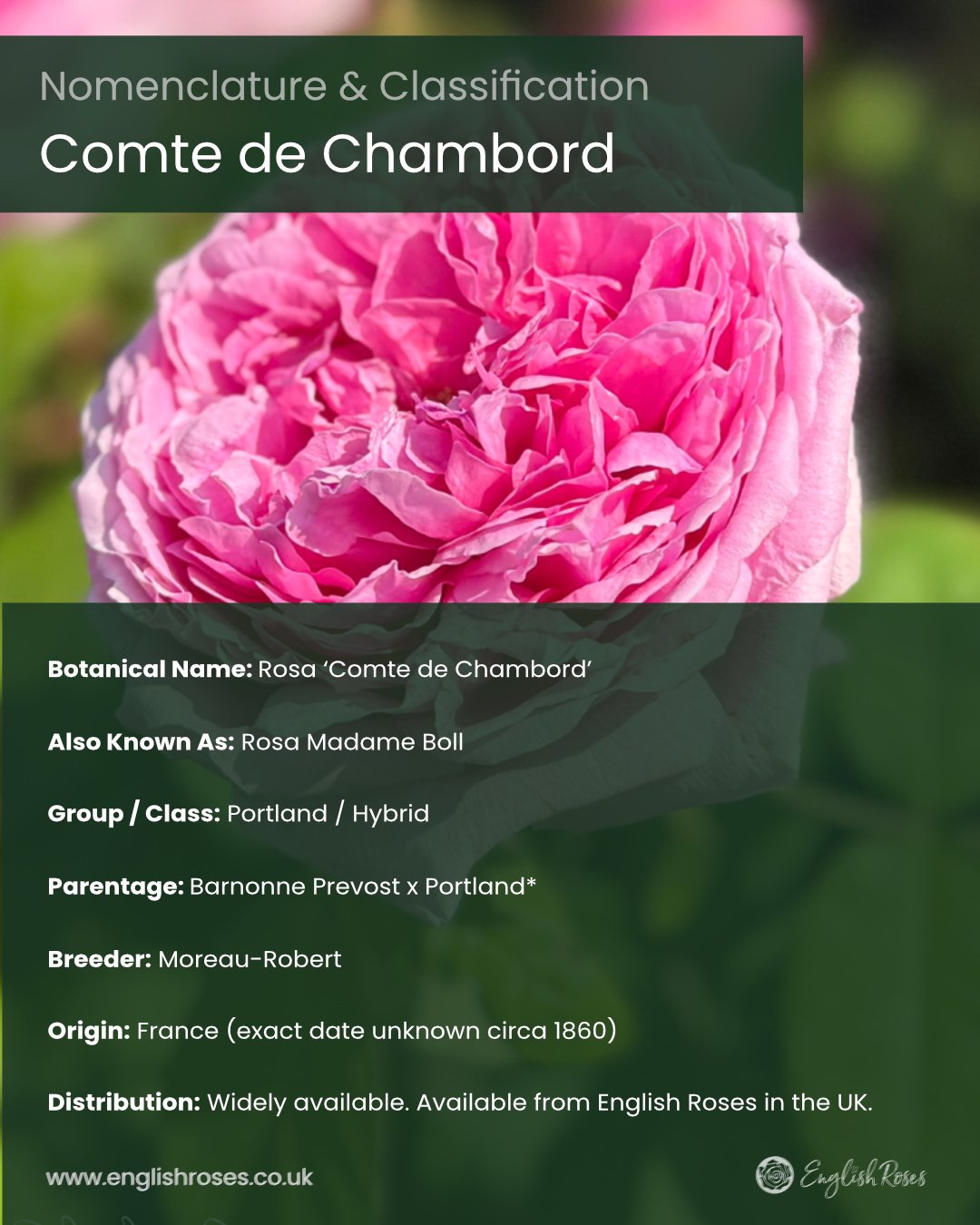
| Botanical Name: | Comte de Chambord |
| Also Known As: | Madame Boll |
| Group / Class: | Portland / Hybrid Perpetual |
| Breeder: | Moreau-Robert |
| Parentage: | Barnonne Prevost x Portland* |
| Origin: | France (exact date unknown circa 1860) |
| Distribution: | Widely available. Purchase from English Roses here. |
History and Development
Henri Comte of Chambord was pretender to the French throne from 1844 to 1883. The last surviving descendant of Louis XV he spent most of his life in exile while attempting to restore the monarchy to post-revolutionary France. Bred by French breeder Moreau-Robert circa 1863 in honour of the Comte, there has since been some mild controversy as many rosarians consider it to be identical to the Madame Boll rose. One theory purports that Daniel Boll bred the rose in New York and sent it to Moreau-Robert who renamed it. Many nurseries list them as synonyms yet there has been no definitive DNA test confirming this assumption. It is also associated with Madame Knorr. Rose breeding was not standardised in the 19th century and together with the common practice of renaming roses this is not the only incident of a similar nature. Comte de Chambord was later used as one of the parents to Gertrude Jekyll rose by David Austin.
More Facts
If you visit Mottisfont Abbey’s famous rose garden, you will find Comte de Chambord rose in bed no. 38!
Requirements and Maintenance
Soil
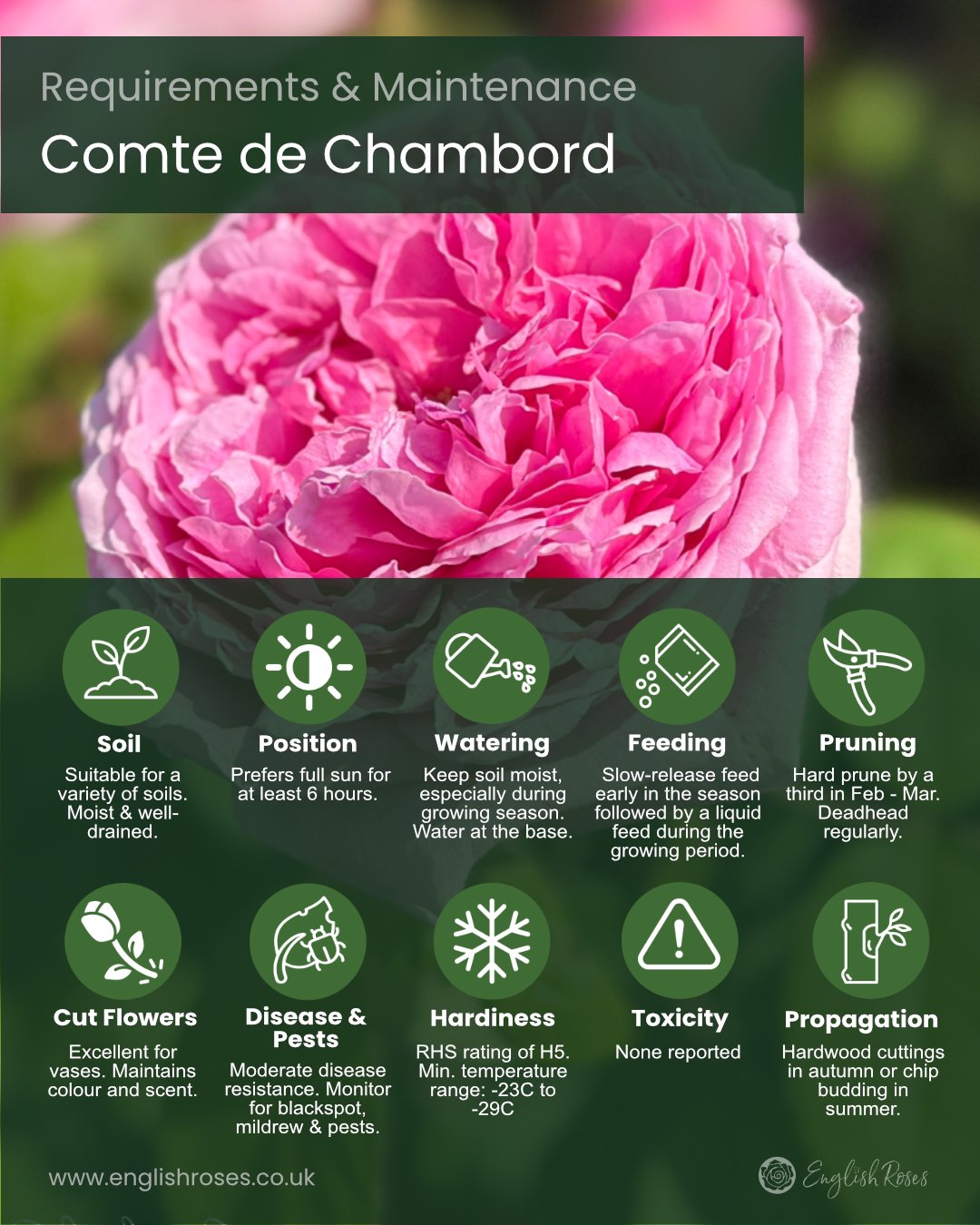
Flourishes in a variety of soils especially when mulched with manure or compost. Aim for slightly acidic soil ph 6 to 7.
Toxicity
None reported
Hardiness
RHS rating of H5 indicating a minimum temperature range of -23C to -29C. Flourishes in northerly gardens and there is anecdotal evidence that it flowers best in cooler weather.
Diseases and Pests
Moderate disease resistance (typical of Portland roses). Monitor for black spot, mildew and pests.
Treat mildew by pruning affected leaves.
Treat aphids by growing plants that attract insects that prey on aphids. See companion plants below.
Treat blackspot by pruning affected leaves, destroying fallen leaves.
We do not recommend using chemical fungicides as they risk reducing soil health and negatively affecting biodiversity. You can purchase
See our help guides for more details.
Position
Full sun for at least 6 hours. May flower less in partial shade.
Cut Flowers
Excellent for vases. Retains strong scent indoors.
Watering
Keep the soil consistently moist, especially during the growing season. Water at the base of the plant to prevent fungal diseases.
Feeding
Slow-release feed early in the season followed by a liquid feed during the growing period.
Pruning
Hard prune in February or March. Regular deadheading during the season promotes new growth.
Propagation
By hardwood cuttings in Autumn or chip budding in summer.
Companion Planting
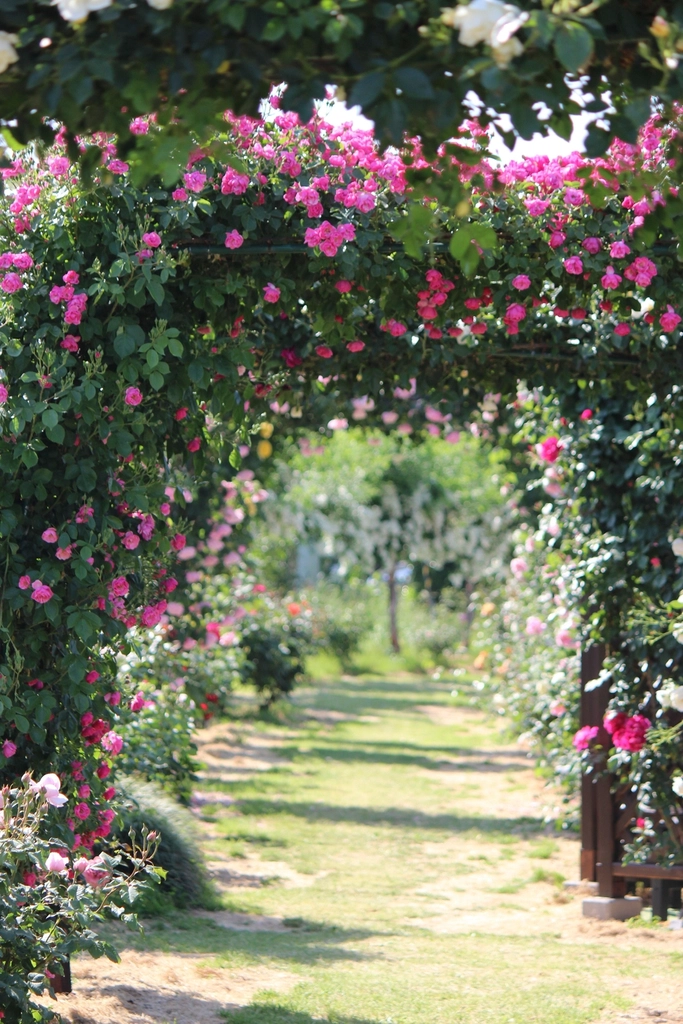
The first step is to choose plants that share similar requirements in terms of soil, fertilizer, water and sun exposure. Be mindful of prolific plants that may compete with your roses.
You may wish to avoid plants that attract aphids such as cosmos, nasturtiums and sunflowers although they can also act as a lure to draw pests away from your roses.
Consider plants that attract insects that feed on aphids. Lacewings, ladybirds and hoverflies are predatory insects that eat pests. The Seedball Beetle mix is perfect for attracting ladybirds to your roses.
Planting the likes of catmint and marigolds you encourage a natural ecosystem beneficial to your roses. Catmint is also a good pollinator and provides attractive ground cover. A lower growing marigold such as French or Signet performs a similar task and delivers a colourful carpet around your roses.
Plants such as alliums, lavender and geraniums possess strong scents that repel pests. Lavender in particular will compliment Comte de Chambord aesthetically and will enjoy a full sun position.
Use a colour wheel to determine complimentary colours. Comte de Chambord roses will form a dramatic contrast when planted with cool blues and purples. Hardy geraniums such as Johnson’s Blue provide ground cover. Lavender will provide a harmonious scent and colour.
Consider plants that will offer colour into the autumn such as salvias and viburnum.
Complementary Roses
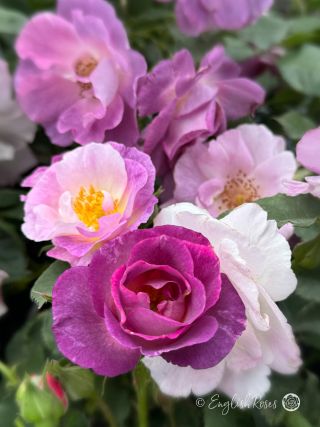
-

Blue For You Rose
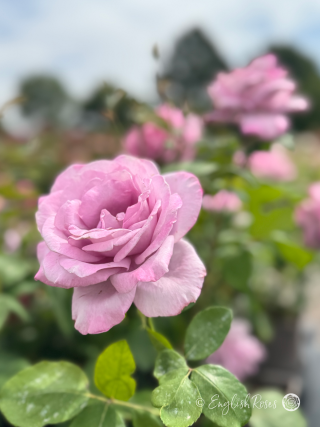
Add to Basket£32.99 -
Blue Moon Rose
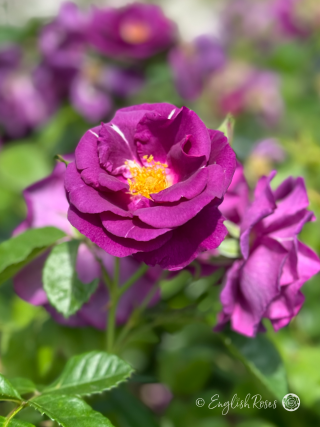
Add to Basket£32.99 -
Rhapsody In Blue Rose
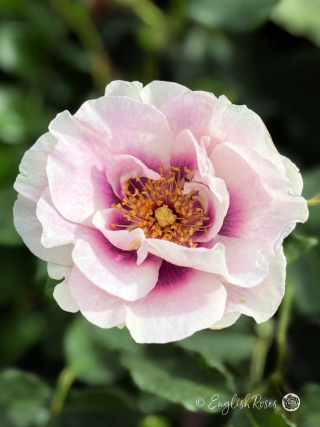
Add to Basket£32.99 -
Eyes For You Rose
Add to Basket£32.99 -
Belle De Crecy Rose
Add to Basket£32.99
Reviews
Customer Reviews
See what our lovely customers say about this variety:
Where to Buy Comte de Chambord Rose
Comte de Chambord Rose
Comte de Chambord Rose is a stunning variety producing large, full pink blooms with a strong damask fragrance. Enjoy the beautiful display as it repeat flowers throughout the season, year after year. Eco-friendly and long lasting, this rose would make a fantastic living gift that will continue to bring joy. Perfect for any occasion, Comte de Chambord Rose will certainly brighten up any garden space and enhance your garden experience.