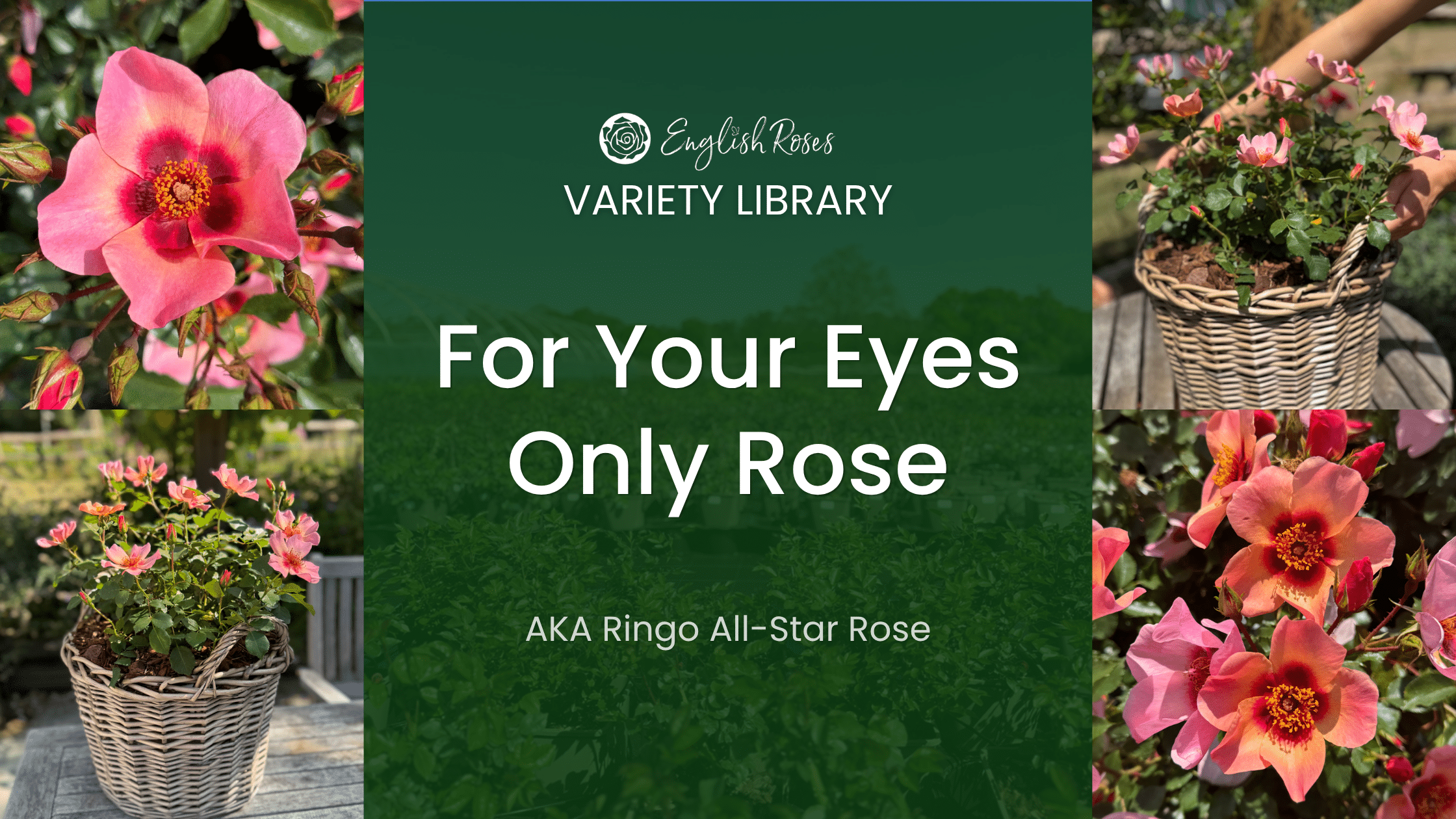
For Your Eyes Only is an unconventional rose that demands attention with its mesmerising shape and colour. Winner of Rose of The Year in 2015 and still unsurpassed in terms of originality and form. Its open corona makes it incredibly attractive to pollinators. You can purchase For Your Eyes Only Rose here.
Watch our video to see all about For Your Eyes Only Rose and how this wonderful variety looks in the garden.
Description

| Colour: | Pink with salmon or apricot tinges in the main body and a deep, concentrated pink central eye crowned by golden stamens. |
| Type: | Floribunda – Persica Hybird |
| Maximum Height/Width: | 90/40cm |
| Foliage: | Glossy, dark green |
| Habit: | Compact dome shaped shrub |
| Petal and Form: | Four to eight petals in an open formation |
| Blooming Period: | Late spring to autumn |
| Fragrance Profile: | Strength – mild Primary Scent – sweet Nuance – lemon |

Great for Pollinators!
Give nature a helping hand by choosing a pollinator-friendly rose for your garden. We have a fantastic range of colours available from patio roses to climbers and they are all attractive to bees and other important insects.
Photos
Taken here at English Roses, we have a selection of photographs showcasing For Your Eyes Only Rose in all its beauty.
Fragrance Profile

For Your Eyes Only is lightly fragranced with sweet notes and a hint of lemon.
Strength – Mild
Primary Scent – Sweet
Nuance – Lemon

Nomenclature and Classification

| Botanical Name: | For Your Eyes Only |
| Also Known As: | Ringo All-Star (USA) |
| Breeder Code: | CHEWeyesup |
| Group / Class: | Floribunda – Persica Hybrid |
| Breeder: | Christopher H Warner |
| Parentage: | Rosa Persica X Unknown |
| Introduced by: | Warners |
| Origin: | UK |
| Distribution: | Widely available. Purchase from English Roses here. |
| Awards: | Rose of The Year 2015 |
History and Development
A century of struggle has seen botanists attempt to crossbreed wild Rosa persica with domestic garden roses. Initial experiments saw weak plants suffering from mildew and developing blackspot.
The breakthrough occurred following thirty years of work by Chris Warner of Warners Roses in Shropshire. Eventually he managed to hybridise Rosa persica. With remarkable patience and determination he made gradual gains on both key sides: the new shrubby plant’s health, form, and vigour, and the striking contrast of the blotched flower, a deep wine red centre that contrasts strongly with an apricot halo. He said it took growing 1000 to pick out 2-3 new plants with the required characteristics.
The Bond film For Your Eyes Only starred a Bond girl aptly named Carole Bouquet.
Requirements and Maintenance

Soil
Flourishes in a variety of soils especially when mulched with manure or compost. Tolerates slightly alkaline to slightly acidic soil.
Read our planting guide here.
Toxicity
None reported.
Hardiness
RHS rating of H6 indicating a minimum temperature range of -15C to -20C.
Diseases and Pests
Excellent disease resistance. However, all roses can be susceptible to some degree to rose black spot, rose rust, replant disease, rose dieback, and rose powdery mildews. Potentially affected by mites, sawfly and aphids.
Treat mildew by pruning affected leaves.
Treat aphids by growing plants that attract insects that prey on aphids. See companion plants below.
Treat blackspot by removing and destroying fallen leaves. For persica hybrid roses, it is recommended not to cut off affected stems as this can cause the rose stress and potentially weaken the plant. Instead, simply remove the leaves and encourage new growth by continuing to feed and water.
We do not recommend using chemical fungicides as they risk reducing soil health and negatively affecting biodiversity.
See our help guides for more details.
Position
Best planted in full sun although anecdotally tolerant of dappled shade.
Read our planting guide here.
Cut Flowers
Not suitable for cut flower arrangements.
Read our ‘How to Cut a Rose For Display’ guide here.
Watering
Keep the soil consistently moist, especially during the growing season. Water at the base of the plant to prevent fungal diseases.
Read our watering guide here.
Feeding
Slow-release feed early in the season followed by foliar feed during the growing period.
Read our feeding guide here.
A granular, slow release feed such as English Roses Protect & Grow Slow Release Rose Feed supports all round health, and nutrients are released steadily over the course of a few months. Combine this with a foliar feed such as English Roses Protect & Grow Rose Foliar Feed in the summer months, for a quick burst of nutrients that encourage beautiful blooms.
Pruning
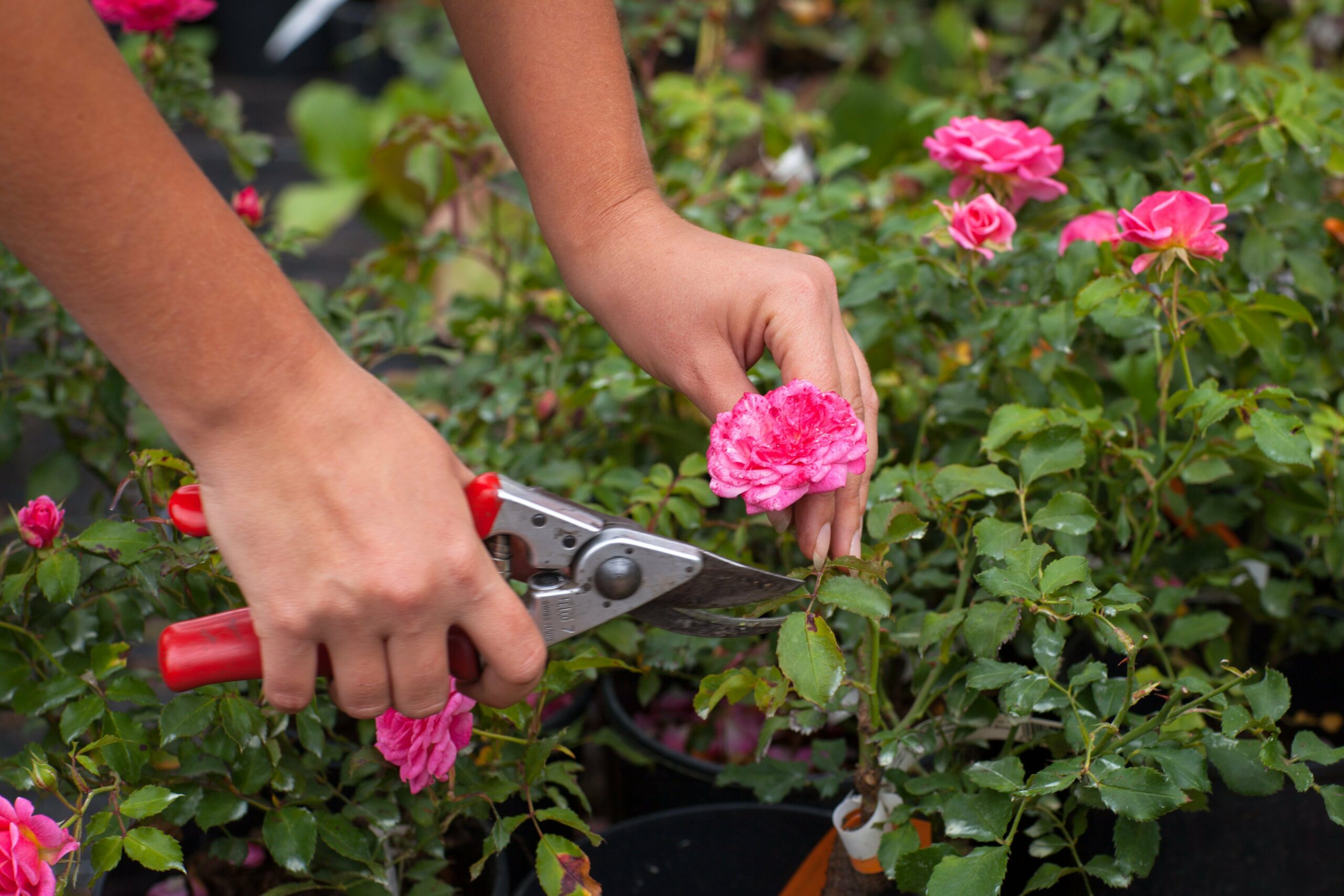
Hard prune in February or March. Regular deadheading during the season promotes new growth. See our pruning guide here.
Propagation
Propagate by semi-ripe cuttings in late summer or hardwood cuttings in autumn, or by chip budding in summer.
Rose Care Help Guides
Would you like more information about caring for your roses? Read our handy how-to guides and other rose care information from our expert Rose Care Team.


Companion Planting
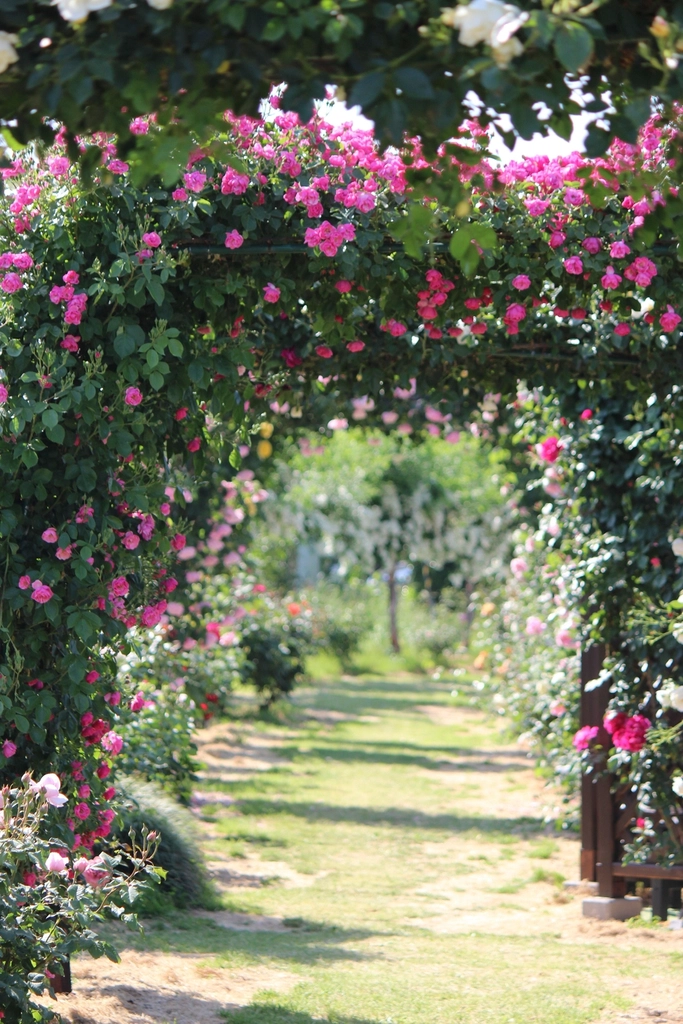
The first step is to choose plants that share similar requirements in terms of soil, fertilizer, water and sun exposure. Be mindful of prolific plants that may compete with your roses.
You may wish to avoid plants that attract aphids such as cosmos, nasturtiums and sunflowers although they can also act as a lure to draw pests away from your roses.
Consider plants that attract insects that feed on aphids. Lacewings, ladybirds and hoverflies are predatory insects that eat pests. The Seedball Beetle mix is perfect for attracting ladybirds to your roses.
Plants such as alliums, lavender and geraniums possess strong scents that repel pests.
Planting the likes of catmint and marigolds you encourage a natural ecosystem beneficial to your roses. Catmint is also a good pollinator and provides attractive ground cover. A lower growing marigold such as French or Signet performs a similar task and delivers a colourful carpet around your roses.
Consider plants that will offer colour into the autumn such as salvias and verbenum.
Complementary Colours
For Your Eyes Only will benefit from either warm sympathetic tones or cooler contrasting colours. For warmth try white foxgloves or verbena (which will offer colour into the autumn) with silver artemisia. Orange or yellow daylilies would also look lovely. For a contrast, look to salvia ‘Caradonna’ (which will also offer colour into the autumn), lavender or catmint.
Complementary Roses
Highlight the stunning pink blends For Your Eyes Only with white roses to really make the colours pop. Deep purple roses will complement the pink, while orange or yellow roses would highlight the visible golden stamens.
As a mid-size bush rose with an eye-catching blend of colours, For Your Eyes Only would look stunning planted en-masse in a bed or border. Planting alongside other persica-hybrid roses that have a similar growth pattern with different colourings would create an interesting visual display.
-

Ice Cream Rose
Add to Basket£31.99 -
Super Trouper Rose
Add to Basket£31.99 -
Korresia Rose
Add to Basket£31.99 -
Rhapsody In Blue Rose
Add to Basket£31.99 -
Lucky Rose
Add to Basket£31.99


Reviews
English Roses Recommends
Hear what our experts at English Roses have to say about For Your Eyes Only Rose:
- “I love the unusual look of For Your Eyes Only rose! The blend of colours change throughout the season, so I get to enjoy a beautiful mix of pink, purple, orange and peach. The open-style flowers also mean the bees and other pollinators get to enjoy this fantastic rose too!” – Katherine, Media and Design Team at English Roses
- “I’ll never understand how roses are named, For Your Eyes Only? Well I hope not as this is one of my favourite roses and I want everyone to see it. It’s pink and apricot and absolutely delightful.” – Richard, English Roses Customer Service Team
Customer Reviews
See what our lovely customers say about For Your Eyes Only Rose:


Where to Buy For Your Eyes Only Rose
For Your Eyes Only Rose
A striking rose, this award winner makes an ideal gift for that special someone. The pink flowers are beautifully shaded and will catch the eye, while the delicate light fragrance attracts pollinators; this rose will fill your garden with colour and life! Unique and thoughtful, this rose would be an enchanting wedding or anniversary gift for your significant other; a gift that keeps on living.

English Roses Variety Library
View more complete guides to your favourite roses. We have created lots of resources containing everything you need to know about each variety including variety specifications, history and care information.


Resources
- rhs.org.uk
- helpmefind.com
- pithandvigor.com
- wikipedia.com
- gardendesign.com
- rosesuk.com
- garden.org
- gardenbeast.com
- warnersroses.com
Keep in Touch!
Be sure to sign up for our free newsletter for the to be kept up to date with the latest news, exclusive offers, and top tips from our expert Rose Care Team.
Follow us on Facebook, Instagram and also TikTok and join us in spreading the joy of roses!