
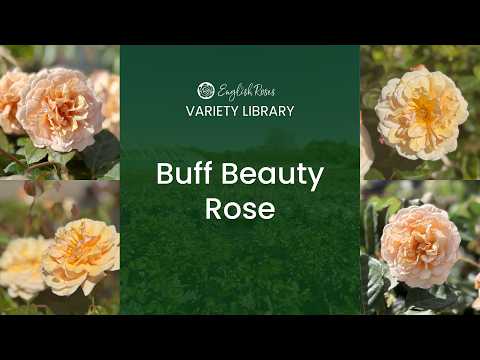
Buff Beauty is a real classic and sure to be a showstopper in any garden! Warm blends of apricot and buff-yellow blooms create an eye-catching display against their dark green foliage. Large trusses of flowers will repeat flower, unleashing a magnificent musky fragrance, creating a delight for all the senses. Bringing a cottage-style element to any garden, this classic rose would make a well-loved gift for any occasion! You can purchase Buff Beauty Rose here.
Watch our video to see all about Buff Beauty Rose and how this wonderful variety looks in the garden.
Description #

| Colour: | Varies from buff yellow, apricot and apricot-blend to orange. |
| Type: | Hybrid Musk Rose |
| Maximum Height/Width: | 120 cm x 120cm but can reach up to 300cm high if left to grow. |
| Foliage: | Deciduous, glossy, dark green. |
| Habit: | Versatile as a tall shrub or climber – vigorous bushy growth. |
| Petal and Form: | 45 to 50 petals, clusters of well filled semi-double flowers |
| Blooming Period: | Summer to autumn |
| Fragrance Profile: | Medium fragrance with notes of classic tea, honey and musk. |

Great for Pollinators! #
Give nature a helping hand by choosing a pollinator-friendly rose for your garden. We have a fantastic range of colours available from patio roses to climbers and they are all attractive to bees and other important insects.
Photos #
Taken here at English Roses, we have a selection of photographs showcasing Buff Beauty in all its wonder.
Fragrance Profile #

Buff Beauty has a medium fragrance with notes of classic tea, honey and musk.
Strength – Moderate
Primary Scent – Musk
Nuance – Apricot

Nomenclature and Classification #

| Botanical Name: | Buff Beauty |
| Group / Class: | Hybrid musk / Old fashioned shrub rose |
| Breeder: | Ann and John Bentall |
| Parentage: | William Allen Richardson x Unnamed Seedling |
| Origin: | UK |
| Distribution: | Widely available. English Roses supply rose gifts including Buff Beauty Rose. |
| Awards: | RHS Award of Garden Merit 1993 |
History and Development #
The Hybrid musk class of roses was created by the Reverend Joseph Pemberton (1852 – 1926) at his nursery at Romford in Essex. As a young boy he was given his own patch of garden to cultivate roses and taught how to propagate them by budding. As a young man he began to exhibit roses with his sister Florence. They travelled across the country winning prizes and building a reputation among the horticulture community.
He loved his grandmother’s roses that tended to finish flowering in July. Pemberton’s ambition was to develop roses that would survive until Christmas, blooming until all others had withered.
He developed a new group of varieties of rose which he called Hybrid Musk. These large bushes, in bloom more or less continuously, bear flowers of varying size and doubleness. They are mostly white, pale pink or pale yellow, in opulent clusters. He chose Trier, a hybrid multiflora offspring of Aglaia as the base for his breeding. In 1919 he began calling his roses Hybrid Musks after Courtney Page, the then Secretary of the National Rose Society used the term in his review of Joseph Pemberton’s new rose ‘Pax’ in 1917. Hitherto they were still being called Hybrid Teas.
He bequeathed his rose fields to his gardeners. One named John Bentall was married to Ann Bentall, an experienced rose breeder. Despite Joseph Pemberton and John Bentall frequently having the rose attributed to them, today Ann is credited with creating Buff Beauty in 1939.
More Facts #
If you visit Mottisfont Abbey’s famous rose garden, you will find Buff Beauty rose in bed no. 4!
Requirements and Maintenance #

Soil #
Moderately fertile, humus-rich, moist but well-drained. Read our planting guide here.
Toxicity #
None reported
Hardiness #
RHS rating of H6 indicating a minimum temperature range of -15C to -20C
Diseases and Pests #
Good disease resistance. Be vigilant for the most common diseases such as powdery mildew and black spot. Signs of insects such as aphids and mites should also be monitored.
Treat mildew by pruning affected leaves.
Treat aphids by growing plants that attract insects that prey on aphids. See companion plants below.
Treat blackspot by pruning affected leaves, destroying fallen leaves.
We do not recommend using chemical fungicides as they risk reducing soil health and negatively affecting biodiversity.
See our help guides for more details.
Position #
Grow in a sunny position. Grows well in shade and tolerant of a northerly aspect. Trellis, arch or wall. Heat tolerant. Read our planting guide here.
Cut Flowers #
Excellent for vases. Read our ‘How to Cut a Rose For Display’ guide here.
Watering #
Keep the soil consistently moist, especially during the growing season. Water at the base of the plant to prevent fungal diseases. Read our watering guide here.
Feeding #
Slow-release feed early in the season followed by foliar feed during the growing period. Read our feeding guide here.
A granular, slow release feed such as English Roses Protect & Grow Slow Release Rose Feed supports all round health, and nutrients are released steadily over the course of a few months. Combine this with a foliar feed such as English Roses Protect & Grow Rose Foliar Feed in the summer months, for a quick burst of nutrients that encourage beautiful blooms.
Pruning #
Hard prune in February or March. Regular deadheading during the season promotes new growth.
Propagation #
By hardwood cuttings in Autumn or chip budding in summer.
Rose Care Help Guides #
Would you like more information about caring for your roses? Read our handy how-to guides and other rose care information from our expert Rose Care Team.


Companion Planting #
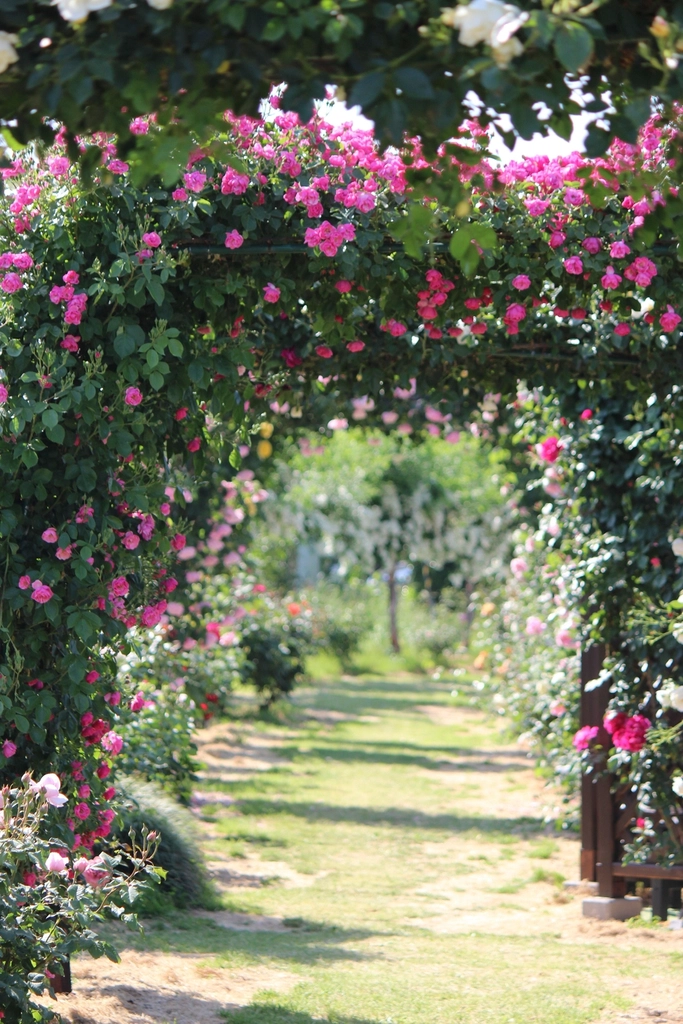
The first step is to choose plants that share similar requirements in terms of soil, fertilizer, water and sun exposure. Be mindful of prolific plants that may compete with your roses.
You may wish to avoid plants that attract aphids such as cosmos, nasturtiums and sunflowers although they can also act as a lure to draw pests away from your roses.
Consider plants that attract insects that feed on aphids. Lacewings, ladybirds and hoverflies are predatory insects that eat pests. Therefore, by planting the likes of catmint and marigolds you encourage a natural ecosystem beneficial to your roses. Catmint is also a good pollinator and provides attractive ground cover. A lower growing marigold such as French or Signet performs a similar task and delivers a colourful carpet around your roses.
Plants such as alliums, lavender and geraniums possess strong scents that repel pests. Lavender in particular will compliment Buff Beauty aesthetically and will enjoy a full sun position.
Consider plants that will offer colour into the autumn such as salvias and viburnum.
Complementary Colours #
Buff Beauty roses will form a dramatic contrast when planted with deep plum and burgundy. Hardy geraniums such as Johnson’s Blue provide ground cover. Lavender will provide a harmonious scent and colour.
Complementary Roses #
As a large shrub rose that will continue to grow tall if allowed, we find that Buff Beauty makes a great statement piece when framed by smaller floribundas. The warm apricot blooms of Buff Beauty would create a striking display when contrasted with deep reds and purples, or plant alongside creams and deep apricots for a more blended colour bed.
-

Ebb Tide Rose #
Add to Basket£29.99 -
Deep Secret Rose #
Add to Basket£29.99 -
Rhapsody In Blue Rose #
Add to Basket£31.99 -
Jubilee Papa Meilland Rose #
Add to Basket£29.99 -
Forever Yours Rose #
Add to Basket£29.99


Reviews #
English Roses Recommends #
Hear what our experts at English Roses have to say about Buff Beauty Rose:
- “I think the great thing about Buff Beauty is its versatility. It’s also beautiful and smells amazing but it’s the way you can keep it as a shrub rose or even train it up a wall. I love that!” – Richard, English Roses Customer Service Team
Horticultural Reviews #
- ‘Best roses to grow’ – Gardens Illustrated
- ‘Rosa ‘Buff Beauty’ is a repeat-flowering hybrid musk rose, bearing huge trusses of fully double, lightly scented apricot-yellow-cream flowers from July to September. Its leaves are particularly attractive, opening red and maturing to dark green. It’s perfect for growing in a mixed sunny border or formal rose garden.’ – Gardenersworld.com
- ‘It has grown faster than any other rose I have ever seen! It went from around 8-10 inches high its first year to at least 4 feet high and 5 to 6 feet wide at the BEGINNING of its second year after a harsh winter. It’s covered in buds. This rose is a great choice for someone who wants a large, fast growing climber!’ – twinkletoad on Help Me Find
- ‘…a rose that offers breathtaking, apricot-gold blooms, a heavenly tea-musk fragrance, and a resilient nature that even novice gardeners can master? It’s true, and it’s one of my absolute favorites.’ – greenygardener.com
Customer Reviews #
See what our lovely customers say about Buff Beauty Rose:


Where to Buy Buff Beauty Rose #
Buff Beauty Rose
Buff Beauty is a real classic and sure to be a showstopper in any garden! Warm blends of apricot and buff-yellow blooms create an eye-catching display against their dark green foliage. Large trusses of flowers will repeat flower, unleashing a magnificent musky fragrance, creating a delight for all the senses. Bringing a cottage-style element to any garden, this classic rose would make a well-loved gift for any occasion!

English Roses Variety Library #
View more complete guides to your favourite roses. We have created lots of resources containing everything you need to know about each variety including variety specifications, history and care information.


Resources #
Keep in Touch! #
Be sure to sign up for our free newsletter for the to be kept up to date with the latest news, exclusive offers, and top tips from our expert Rose Care Team.
Follow us on Facebook, Instagram and also TikTok and join us in spreading the joy of roses!


