Incredible purple flowers, award winning and bee-friendly – Rhapsody in Blue possesses a medley of wonderful qualities that make it a sought after and revered floribunda. You can purchase Rhapsody in Blue Rose here.
Watch our video to see all about Rhapsody in Blue Rose and how this delightful variety looks in the garden.
Description #

| Colour: | Initially deep purple to plum fading to smoky violet or slate blue. |
| Type: | Floribunda Rose Bush |
| Maximum Height/Width: | 140/90cm (in 3 to 5 years) |
| Foliage: | Glossy, medium green. |
| Habit: | Vigorous upright growth. |
| Petal and Form: | 9 to 16 petals, single to semi-double flowers in clusters. |
| Blooming Period: | Late spring to autumn. |
| Fragrance Profile: | Strength – strong Primary Scent – spicy Nuance – clove |

Great for Pollinators! #
Give nature a helping hand by choosing a pollinator-friendly rose for your garden. We have a fantastic range of colours available from patio roses to climbers and they are all attractive to bees and other important insects.
Photos #
Taken here at English Roses, we have a selection of photographs showcasing Rhapsody In Blue Rose in all its beauty.
Fragrance Profile #

Rhapsody in Blue Rose has a strong sweet fragrance with hints of apple and cloves.
Strength – Strong
Primary Scent – Sweet
Nuance – Apple and Cloves

Nomenclature and Classification #

| Botanical Name: | Rhapsody in Blue |
| Also Known As: | N/A |
| Breeder Code: | FRAntasia |
| Group / Class: | Floribunda |
| Breeder: | Frank R Cowlishaw |
| Parentage: | Summer Wind x unnamed seedling |
| Introduced by: | Introduced by Warners in 2000 |
| Origin: | UK |
| Distribution: | Widely available. English Roses supply rose gifts including Rhapsody in Blue Rose in the UK |
| Awards: | Rose of The Year 2003, Royal National Rose Society Gold Medal 1999 |
History and Development #
Developing a blue rose has been something of a distraction for rose breeders. Frank Cowlishaw developed Rhapsody In Blue in 1999 and the rose became a sensation for pushing the boundaries of rose colour genetics. The intervening years have not witnessed the arrival of a truly blue rose leaving Rhapsody In Blue as the next best thing. Awarded Rose of The Year in 2003, it remains an immensely popular trailblazing example of rose breeding innovation.
Requirements and Maintenance #

Soil #
Suitable for most soil types. Flourishes most in loam or clay loam soil especially when mulched with manure or compost. Moist but well-drained and slightly acidic to neutral if possible (ph 6.0 – 7.0). Fertilise in early spring with balanced rose fertiliser and repeat according to packet instructions.
Read our planting guide here.
Toxicity #
None reported.
Hardiness #
RHS rating of H6 indicating a minimum temperature range of -15C to -20C.
Diseases and Pests #
Excellent disease resistance. While yellow roses have had a reputation for disease susceptibility however, this is largely a historical issue. Modern yellow roses, especially award winners, are much less prone to infection. Nevertheless it should be standard practice to be vigilant for signs of common threats such as mildew and blackspot. Signs of insects such as aphids and mites should also be monitored.
Treat mildew by pruning affected leaves.
Control aphids by growing plants that attract insects that prey on aphids. See companion plants below.
Treat blackspot by pruning affected leaves, destroying fallen leaves.
We do not recommend using chemical fungicides as they risk reducing soil health and negatively affecting biodiversity.
See our help guides for more details.
Position #
Full sun to dappled shade in mid-border. For containers ensure the pot is at least 12 inches deep and 15 inches in diameter with drainage holes. Plant a minimum of 60 cm apart from other roses.
See our planting guide here.
Cut Flowers #
Not recommended due to slender stems and short vase life.
Read our ‘How to Cut a Rose For Display’ guide here.
Watering #
Keep the soil consistently moist, especially during the growing season. Water at the base of the plant to prevent fungal diseases. Read our watering guide here.
Feeding #
Slow-release feed early in the season followed by foliar feed during the growing period. Read our feeding guide here.
A granular, slow release feed such as English Roses Protect & Grow Slow Release Rose Feed supports all round health, and nutrients are released steadily over the course of a few months. Combine this with a foliar feed such as English Roses Protect & Grow Rose Foliar Feed in the summer months, for a quick burst of nutrients that encourage beautiful blooms.
Pruning #
Hard prune in February or March. Regular deadheading during the season promotes new growth. See our pruning guide here.
Propagation #
By hardwood cuttings in Autumn or chip budding in summer.
Rose Care Help Guides #
Would you like more information about caring for your roses? Read our handy how-to guides and other rose care information from our expert Rose Care Team.


Companion Planting #
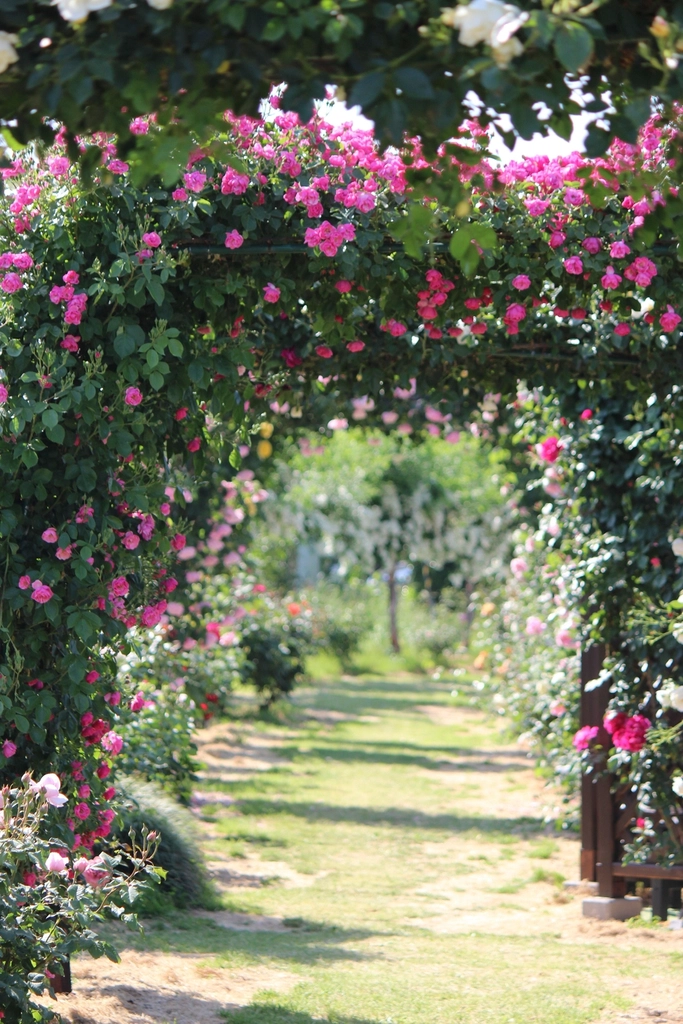
The first step is to choose plants that share similar requirements in terms of soil, fertilizer, water and sun exposure. Be mindful of prolific plants that may compete with your roses.
You may wish to avoid plants that attract aphids such as cosmos, nasturtiums and sunflowers although they can also act as a lure to draw pests away from your roses.
Consider plants that attract insects that feed on aphids. Lacewings, ladybirds and hoverflies are predatory insects that eat pests. The Seedball Beetle mix is perfect for attracting ladybirds to your roses.
Plants such as alliums, lavender and geraniums possess strong scents that repel pests.
Planting the likes of catmint and marigolds you encourage a natural ecosystem beneficial to your roses. Catmint is also a good pollinator and provides attractive ground cover. A lower growing marigold such as French or Signet performs a similar task and delivers a colourful carpet around your roses.
Consider plants that will offer colour into the autumn such as salvias and verbenum.
Complementary Colours #
Rhapsody In Blue looks superb when contrasted with pale creams and yellows. Plants such as lady’s mantle, fern leaf yarrow or threadleaf coreopsis create a classic cottage garden look. Blues and purples create a blended palette. Try catmint, woodland sage or English lavender for a more harmonious blend.
Complementary Roses #
As a pollinator friendly rose, Rhapsody in Blue would create a wildlife haven when planted en-masse or with other bee-friendly roses! To really make the colours stand out, plant next to roses that bloom cream or warm apricot, or even golden yellows that would harmonise with the exposed golden stamens of Rhapsody in Blue.
-

Champagne Moment Rose #
Add to Basket£31.99 -
Blue For You Rose #
Add to Basket£29.99 -
Our Dream Rose #
Add to Basket£29.99 -
Purple Skyliner Rose #
Add to Basket£33.99 -
Timeless Cream Rose #
Add to Basket£31.99


Reviews #
English Roses Recommends #
Hear what our experts at English Roses have to say about Rhapsody In Blue Rose:
- “Finding deep purple roses is not an easy task which is why we’ve grown ‘Rhapsody in Blue’ for decades. I love that it delivers proper deep purple flowers and has a bright yellow stamen in the centre which gives it a big thumbs up for our friendly pollinators too. The flowers really are uniquely amazing, and it won “Rose of the Year” for its healthy attributes, which says it all for me!” – Dan, Owner at English Roses
- “Rhapsody In Blue rose is not blue. There are no blue roses. But you have to love the rich plum colour – I don’t think there’s another rose like it. Oh, and it’s bee friendly!” – Ben, Rose Care Team at English Roses
Horticultural Reviews #
- ‘Rhapsody in Blue is a wonderful smoky violet-blue colour. Forum friend Jack alerted me to another of its beauty spots – the foliage is a light, clean, sunny green. Sorry, but I’ll have to use that well worn rose phrase again. Rhapsody in Blue is absolutely beautiful.’ – Moosey’s Country Garden
- ‘…seems to love our cooler climate here in the north east of Scotland. Absolutely smothered in clusters of scented flowers early till mid summer and buds starting to open again for an early Autumn show.’ – Aberdeen Gardening
- ‘If you are looking for a less than ordinary rose, you cannot go wrong with Rhapsody in blue. Its deep purple flowers with bright yellow centers will be the focal point of any garden.’ – Garden Beast
Customer Reviews #
See what our lovely customers say about Rhapsody In Blue:


Where to Buy Rhapsody in Blue Rose. #
Rhapsody in Blue Rose
Rhapsody In Blue Rose is winner of Rose Of The Year 2003, and is still a firm favourite! The stunning flowers are a rich purple, that fade to slate blue with age – the closest you’ll get to a true ‘blue’ rose! With its gorgeous colouring and heavenly apple-like scent, this rose is sure to be a star of the garden! Send to loved ones for a lasting and eco-friendly gift that is perfect for any occasion.

English Roses Variety Library #
View more complete guides to your favourite roses. We have created lots of resources containing everything you need to know about each variety including variety specifications, history and care information.


Resources #
Keep in Touch! #
Be sure to sign up for our free newsletter for the to be kept up to date with the latest news, exclusive offers, and top tips from our expert Rose Care Team.
Follow us on Facebook, Instagram and also TikTok and join us in spreading the joy of roses!